Vastly, hugely, mind-bogglingly big
I’m old enough to remember when a $10bn+ financing announcement was unusual.
All the way back in October 2025, there was much excitement associated with the issuance of Meta’s Project Beignet transaction, funding the Hyperion data center development in Louisiana — the largest single-tranche corporate bond at the time.
Now, quite apart from the glut of directly-issued hyperscaler corporate debt, there’s a monster infra bond every quarter or so. $12bn for Meta’s Sopaipalla. $35bn for Anthropic to buy Google chips, underpinned by Broadcom. For a touch of diversification from AI, try a $52bn deal for Paramount.
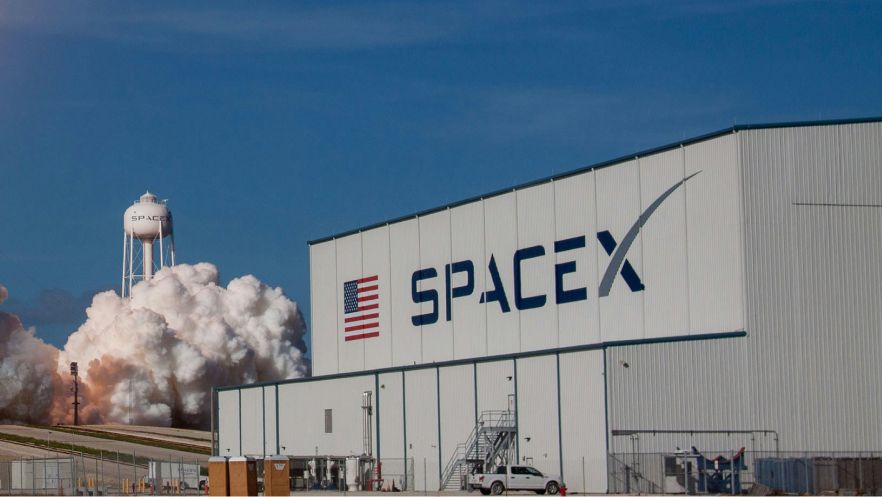
Now it’s the turn of SpaceX. A hotly anticipated $40bn debt package hit the tapes this week, in the form of Saturn Funding — KBRA rating here, Moody’s here. It will fund the purchase of $47bn in Nvidia chips (the balance being essentially a SpaceX first loss, structured as an upfront lease payment). These are Vera Rubin chips, which apparently deliver 3.6x exaFLOPs of performance (me neither, but Good Chips, apparently).
Each one of the AI megadeals has had quite different financial structures. Beignet was basically a project bond, secured on the real estate, the shed, and the chips, with enough lease commitments behind it to take off any construction and refi risk.
This is structured as a GPU financing, independent of any real estate, and the actual issuance vehicle is not linked to SpaceX, nor a particular data center — it’s an indirect subsidiary of Atlas SP Partners, the asset-backed financing business owned by Apollo. This entity owns the chips, with their purchase funded by the bond issues, but the lease obligations of SpaceX are “hell or high water”, reinserting a credit-linkage to the company.
Again, this differs from other structures — in Beignet, for example, the credit-linkage to Meta comes not straight through the leases (Meta has five-year break-terms) but through a residual value guarantee and make-whole mechanism. The difference partly comes from the difference in tenor; as a GPU financing, the Saturn/SpaceX deal is structured so that the lease payments fully amortise the purchase price in five years; as a real estate-project bond structure, Beignet has to manage construction risk plus a useful life of 30 years or more.
The bonds were talked in the mid-300bps area, via sole structurer Goldman Sachs, and reportedly landed at 345bps.
These bonds are basically dual-recourse instruments — to SpaceX lease obligations and to the chips themselves — which should arguably give them better credit quality than SpaceX unsecured bonds. Yet the price talk is wider! It's also wider than where both SpaceX's five-year CDS and its 2031 unsecureds trade. 9fin reported the price talk was more in line with SpaceX's 10-year bonds.
One could argue that Elon-linked companies don’t always honour their lease obligations — Twitter stopped paying for a lot of its office space following his purchase — so perhaps the lease commitment is worth less than it would be elsewhere (and less than the creditors’ rights in the unsecured bonds).
But this is a more general feature of the digital infrastructure market — regular way hyperscaler IG trades tight vs structured off-balance sheet vehicles, even if these are robustly linked to the exact same companies. There’s plausibly a smaller audience for the more highly structured transactions, so it kind of makes sense from a market-technical viewpoint, but what’s in it for the hyperscalers?
Why pay, collectively, billions more in interest (and a good chunk more in fees) to do these kinds of deals, instead of just issuing more and more unsecured? The market and the rating agencies might be somewhat inefficient in adding back the lease commitments, but it’s hardly a secret that it’s going on, and increasingly, thoughtful analysts of these companies are making sure they capture leasing.
Here’s 9fin’s take, for just one example — Oracle gets an extra 10 turns of leverage just from its lease commitments! Failure to honour a lease doesn’t cross-default corporate debt, but it’s surely factored into the balance sheet these days.
In the case of SpaceX, not all the company’s investors are drilling into the financials. A typical earnings day question reads “Will SpaceX land a Tesla Roadster on the moon…seriously that would be awesome”…though there are presumably more sober minds at work on the SpaceX balance sheet as well.
Concentration limits might be easier to evade if Saturn Funding goes in a different bucket from SpaceX unsecured — but the big reason is that these firms need all the capital markets firing at once. If there are going to be capacity constraints on funding for AI capex spend, better to have taken bites out of every possible investor base, rather than maxing out on the cheapest-to-deliver before turning elsewhere. What’s a couple of hundred basis points to a godlike superintelligence?
Pro-rata
Last week, Chetwood Financial priced its latest deconsolidation deal, one of many challengers in the market contemplating the advent of UK Basel in January. Others eyeing the market, including Cynergy and Tandem (based on SPV filings), and in the time it’s taken to write this column, Shawbrook has announced a preplaced Ealbrook transaction. Even that’s probably a conservative estimate; in round numbers, there are zero UK challenger finance teams that haven’t thought about the Basel impact.
And in many of these cases, a balance sheet derecognition of mortgage underlyings via securitisation is going to be a partial solution — the challenger sector is replete with specialist mortgage lending. These institutions have been largely unable to compete with either the vast liquidity trapped in the ring-fenced units of the clearing banks or the internal models which cut RWAs for prime owner-occupied to rock bottom.
Paragon and OSB have both been working on getting IRB approval for a decade, and, despite extensive lobbying from the broader sector for at least this period, Parliamentary examination and consultations from the PRA, neither have it yet.
Neither is it easy for challenger banks to use other forms of derisking. Challenger bank SRT has been much discussed, but not much executed. British Business Bank ENABLE guarantees do show up on balance sheet as SRT securitisations, and the BBB has its new hybrid structure this year — but the best-known challenger to take a run at the private sector synthetic SRT market is Allica Bank back in 2024, and it didn’t go well.
By contrast, the template for mortgage deconsolidations is now well-understood, the pool of potential counterparties (for the equity) is deepening, and these can be executed with an accounting opinion, without waiting for regulatory approval.
This is partly an own-goal by the UK supervisor — in contrast to the European supervisory bodies, which pre-approve SRTs, UK banks need to structure and execute a deal and then retrospectively ask for capital relief, adding wholly unnecessary uncertainty to the process.
A Barclays or a Lloyds can wear the risk, and take confidence after dozens of deals that they will get the desired treatment; for a challenger, where a first deal is a huge administrative lift and the planned capital relief per trade is proportionally greater, it’s very off-putting.
The PRA has fired a warning shot on the use of deconsolidations, saying in its spring Financial Stability Report that “Firms must also give full consideration to the risks involved in other forms of securitisations that allow them to achieve similar capital relief benefits, but sit outside of the SRT regulatory perimeter, and are therefore not subject to the same automatic regulatory assessment.”
But the whole point of deconsolidation and derecognition treatment is that the assets are sold!
The regulator could tweak the rules on the scope of regulatory consolidation if it really wanted to stamp these out, but that has knock-on consequences, so it’s just raised eyebrows for now.
Still, we raise the Chetwood deal because it features a structural twist that makes these trades even more attractive — pro-rata amortisation, at least for an initial 12 month period. For rapidly amortising portfolios, this maintains the efficiency of the structure, leaving more excess spread for the residual buyer, and therefore raising the price.
The question is not so much “why do this”, as “why not” – the main downside of pro-rata structures is that senior buyers don’t like them as much. Instead of the deal deleveraging as the senior pays down, leverage stays constant longer.
In a world where the binding constraint on a lot of securitisation executions is the senior buyer base, it largely makes sense to optimise for senior execution. That’s why we haven’t any revival of pro-rata switching structures where there’s a distributed senior tranche — with the sole exception of the One William Street-sponsored and Citi-arranged London Wall Mortgage Capital 2024, a deal backed by acquired collateral from Fleet Mortgages, Charter Court, and TML.
But in challenger bank deconsolidations, the challenger bank often keeps the whole senior tranche itself. This might be used as Bank of England eligible collateral, or simply as an investment position with attractive return on RWA characteristics.
Some investors might have an inbuilt cultural resistance to accepting pro-rata pay — but the tweak worked for Chetwood, and the door is wide open for others to follow!
9fin news
What’s actually going on at Arini?
Goldman, Apollo tee up $40bn SpaceX deal
French bank eyes data centre SRT and so does a Japanese bank
SMBC issues SRT with acquired portfolio
EBRD-backed Fasanara fund skips bank lines
More hedge funds using private credit TRS
Syndicate head switches to RR financing role
Non-GSIBs see biggest SRT boost
ECB sizes EU area SRT mart at €630bn
Me IRL
I will be at the DealCatalyst Specialist Lender Finance conference on Monday, moderating a fireside chat between Banu Kisakurek of Goldman Sachs Asset Management and Alison Trusty of Aon.
We’ll be touching on some high-level questions like the place of asset-based finance in a portfolio, as well as some crunchier issues like how to do due diligence in a post-Market Financial Solutions world.
If you’re not registered, come! If you are, see you there!
Do synthetic deals dream of significance?
Right before the 2008 crisis, it was considered cool and fun to do complex financial structuring and backsolve from this to cool acronyms. So we had Monte dei Paschi’s FRESH, the UK bank DISCOS, and the Wu Tang Clan’s CREAM (Ed. Surely a PIK note?).
This went back to the '80s at least, where the rates desks created LIONS (Lehman Investment Opportunity Notes), TIGRS (Treasury Investment Growth Receipts), as well as CATS and ELKS.
In post-crisis credit markets, even now, this is not really considered cool (perhaps AMAPS and APADS show the tide is turning?). Equity degens still enjoy it though — one of the other questions on SpaceX’s last results asked “Can SPCX be renamed to SXSI pronounced sexy?”
Acronyms might be out, but there are persistent rebrand efforts afoot.
When private credit was the fundraising trend of the moment, you could honestly put anything in “private credit” — infra debt, small ticket CRE, fund finance, corporate RCFs, borrowing base facilities, leasing, GP stake financing, block discounting etc etc etc etc. If it didn’t have an ISIN...must be private credit credit? ABF is a similarly broad church; subtract “sponsor-backed leverage corporate finance” from the above, and all can plausibly be ABF; if there are assets, even intangible ones, you’re good to go.
Sub-sectors of the securitised products industry have been very focused on branding. The CLO market has an obsession, verging on paranoia, about being bracketed with CDOs of ABS. Somehow this paranoia continues with a trillion outstanding and counting — here’s a piece from last year, from ETF provider Van Eck.
The SRT market has similar fears, with better foundation — even as the market goes from strength to strength, there’s still a thinkpiece every few months about the terrifying cocktail of credit derivatives and tranching, with some arch 2008 reminiscences thrown in.
In an effort to make the market cuddlier, some funds (notably market whale PGGM) prefer to call it “risk-sharing”, while market neophytes still sometimes called it “synthetic risk transfer” (rather than "significant").
Now, industry body IACPM (International Association of Credit Portfolio Managers) is wading in to try to bring some order to the chaos. As it points out, the industry uses a bunch of different acronyms for the same thing — SRT, CRT, CRS, OBS (kind of niche; on balance-sheet securitisation).
It’s not easy! As the IACPM notes, “not all risk sharing transactions are securitizations, not all securitizations achieve Significant Risk Transfer (SRT), and not all securitizations achieving SRT are synthetic.”
The association has left the thorny question of synthetic or significant as “undefined, allowing institutions to retain their preference”.
But it clearly backs synthetic, since it comes with a taxonomy definition which says transactions in its “SRT Securitization” category don’t need a regulatory capital release, but do need to be synthetic, though it notes (correctly) that “[synthetic] is still considered stigmatizing by some in the market”.
We’d have loved to be a fly on the wall for these discussions, but I don’t think it will end up settling the argument; as with most things, it depends where you sit.
For Santander, among the largest issuers of both synthetic and true sale Significant Risk Transfers, the key thing about their deals probably is the regulatory treatment. Different portfolios work better for cash or synthetic treatment, the group capital management function is probably fairly agnostic about structure.
For a pure SRT fund, it’s probably the synthetic-ness (syntheticity?) that’s relevant — those are the deals they get shown, the deals they buy, the structures they are familar with, the execution process they like. But away from that, plenty of funds do a little of both, and may not care.
FWIW we’re Team Significant; in the unlikely event the IACPM succeeds in getting widespread buy-in for its efforts, it still leaves open the question of what to call Cash SRTs. They’re clearly SRT securitisations, but the IACPM “SRT Securitization” definition excludes them.
Back to the drawing board!