Don’t miss out on news you won’t find anywhere else — get The Memo US and The Memo Europe in your inbox every two weeks.
China Vanke, one of the nation’s largest real estate developers and one that’s backed by state-owned enterprise Shenzhen Metro, is staring down a large maturity wall in 2026 — and appears to be out of funding options.
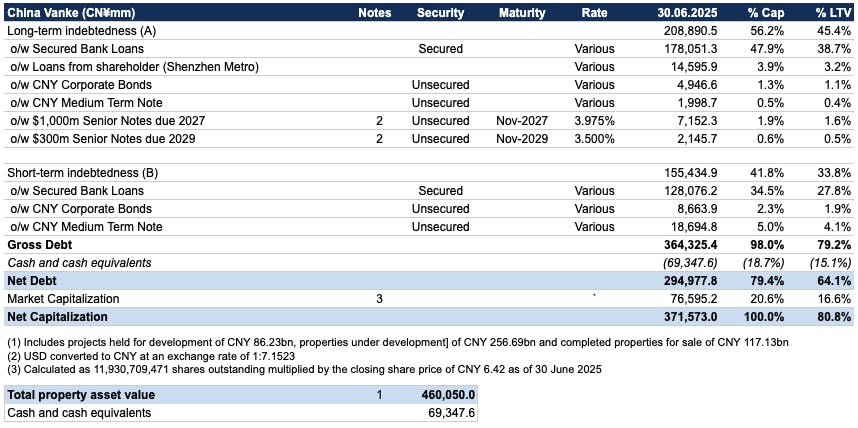
In recent years, Vanke has relied on operating cash flow and loan facilities from both local banks and Shenzhen Metro to service its debt after the bond market closed to Chinese real estate developers. Last week however, the company requested a one-year deferral on its on-shore bond of CNY 2bn ($283m) due December 15, a first for the company.
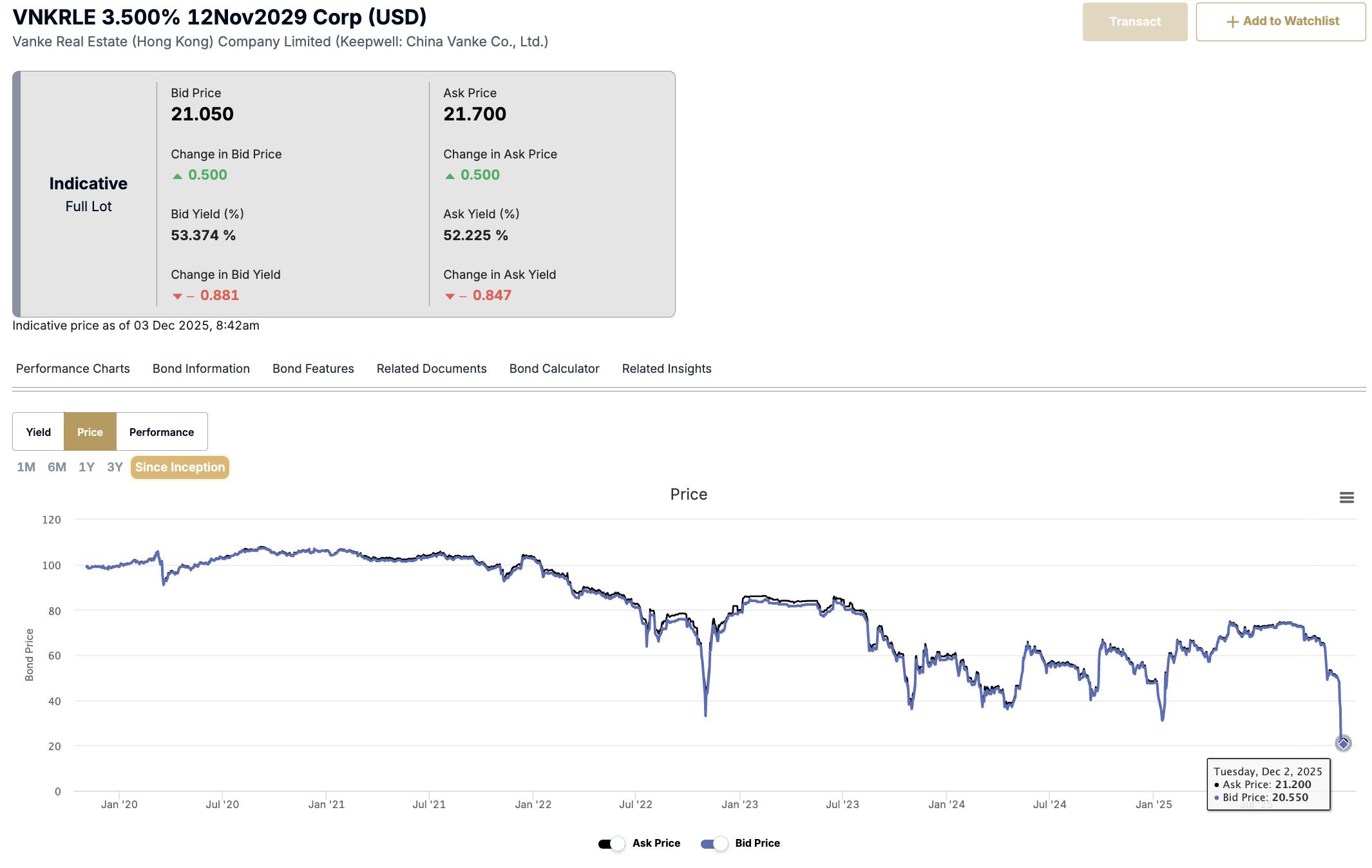
Bond prices dropped to a record low on concerns the government will end its support for Vanke and allow it to become the next property developer to default.
This report investigates Vanke’s current situation and how it got here. Watch out for part two next week, in which 9fin explores potential solutions the company may pursue to resolve the situation.
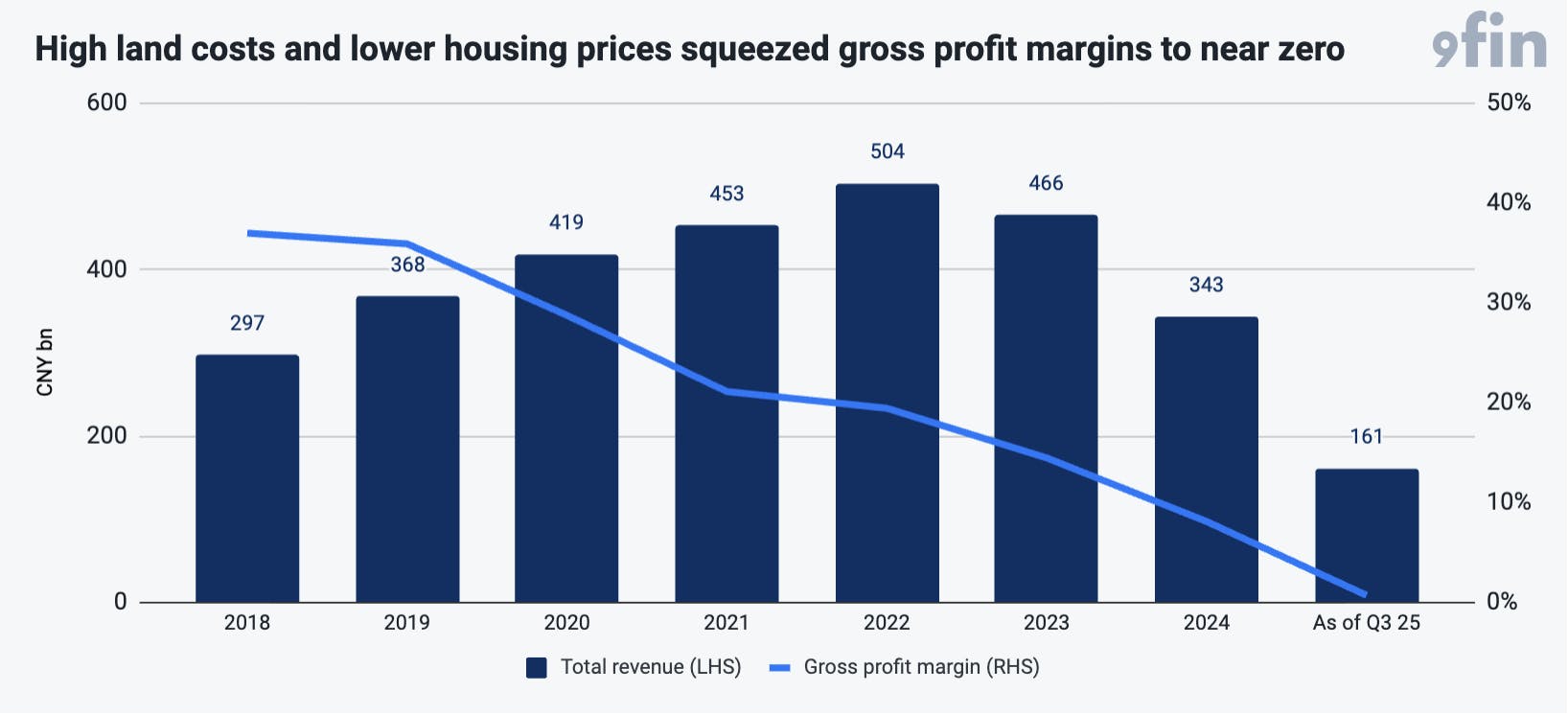
Expensive land costs, plus cash prioritization, squeezes margins
Before the Chinese property sector crisis began in late 2020, Vanke steadily grew its revenue by acquiring land in cities across the nation. From 2018 to 2022, revenue almost doubled to CNY 504bn, even after 2021 saw the beginning of a slowdown in the market.
However, that land was purchased at increasingly high prices. In 2019, Vanke acquired 24.8m sqm of attributable gross floor area at an average cost of CNY 6,252 per sqm, far above China’s average transaction floor price of around CNY 2,507 per sqm and the average transaction floor price for residential-use land of around CNY 4,363 sqm. Vanke’s former chairman Yu Liang said “some city branches invested rashly.”
When the Chinese economy entered a downturn, Vanke carried this expensive land into a weakened market. Average selling prices fell, pre-sale approvals were delayed, and sales volumes dropped, significantly squeezing gross profit margins.

China Evergrande’s 2021 default then triggered a systemic collapse of confidence, and offshore bond markets shut down for Chinese real estate developers. Despite being a top-tier SOE-backed developer, Vanke faced tightened funding conditions and shifted to a “cash over profit” strategy, prioritizing liquidity generation to meet maturing obligations.
Positive operating cash flow coming to an end?
China's property sector operates on a pre-sale mechanism, where homebuyers pay instalments before projects are completed. Real estate developers like Vanke benefitted from this model as cash inflows arrive before construction cash outflows peak.
Vanke’s operating cash flow, combined with debt financing, previously formed a stable funding channel. However, when the market turned in late 2020 and pre-sale escrow rules tightened — reducing developers’ ability to use customer deposits as working capital — positive operating cash flow shrank from CNY 53.2bn in 2020 to as little as CNY 2.8bn in the past four years.
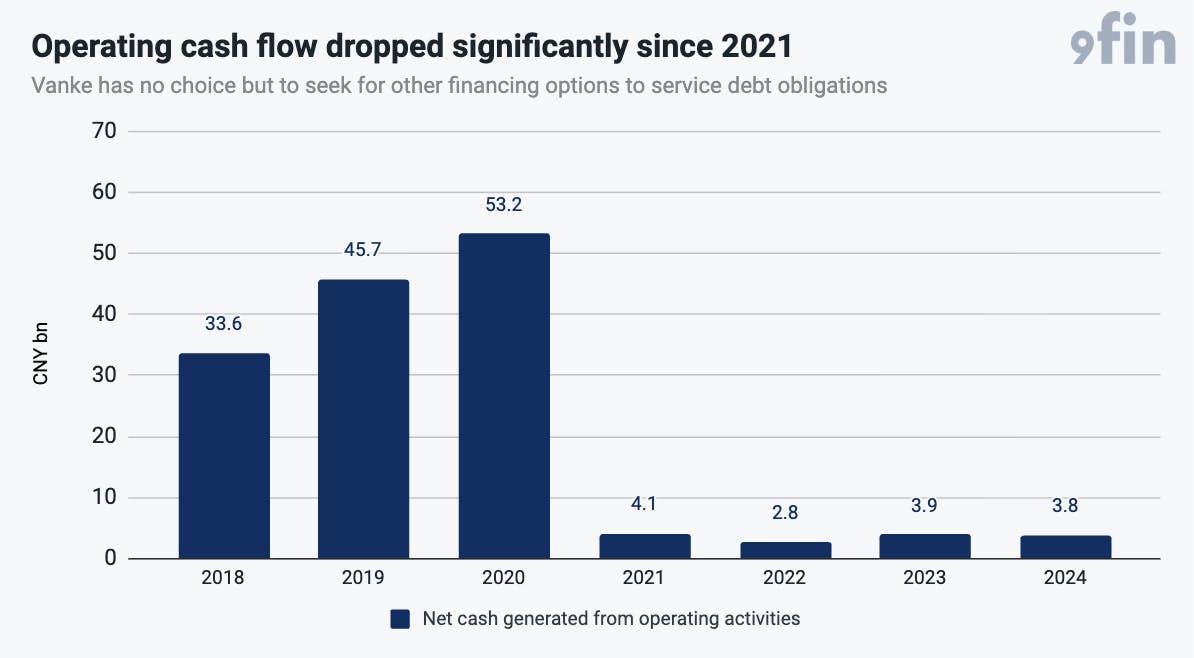
What cash generation Vanke did record in FY 24 came not from the company’s core business but from bulk asset sales and project disposals, which Vanke executed aggressively to recover liquidity. The company completed 54 bulk asset transactions in 2024 such as selling project equity stakes, commercial assets and unsold residential inventory, with a total contract value of CNY 25.9bn that allowed it to collect more than CNY 10bn in cash.
How were bond repayments funded?
Despite its shrinking cash flow, Vanke has paid its dollar bonds as they came due, totalling more than $3.2bn since 2023. These bond repayments were supported by:
- Vanke’s largest shareholder Shenzhen Metro, which has provided the company with preferential shareholder loans totalling CNY 23.9bn as of H1 25
- Chinese regulators pushing local banks to continue to provide financing and to extend maturities for Vanke
- Vanke selling assets and divesting non-core businesses, including its Shenzhen headquarters project and its stake in KE Holdings. There are also reports the company may seek to sell its stake in logistics operator GLP
Looking ahead however, recent developments are indicating that these support measures are insufficient:
- Vanke has approached holders of a CNY 2bn bond coming due on 15 December to extend maturity for 12 months, with a meeting set for 10 December
- Vanke pledged its entire 57.16% stake of listed property management unit Onewo Inc. to Shenzhen Metro. This effectively secured Shenzhen Metro’s exposure ahead of other unsecured creditors and led to doubts over whether Shenzhen Metro will continue to backstop Vanke
- Vanke was once rated investment grade but major agencies have been downgrading its ratings. The latest came from Fitch on 2 December, when it downgraded the company’s offshore bonds to CC, as the bond extension heightened the risk of a potential distressed debt exchange
- Private agencies withheld China’s latest home sales data, fueling fear of a further deterioration of the real estate market.
Vanke has CNY 128bn of bank loans due in the coming year but only CNY 69bn in cash and cash equivalents. Its operating cash flow can no longer sustain debt obligations as it did in the past, and the bond market remains closed to real estate developers. Without further support from Shenzhen Metro, the Chinese government, or extensions on its loans and bonds, Vanke may possibly be the next developer to default.